
Rooms
Living room indirect lighting
The living room is where indirect light most visibly succeeds or fails. The lip is viewed from the sofa, the TV background decides the evening, and the same light has to work for cleaning and for films.

Why the living room is the most demanding
Three things make the living room the hardest space for indirect light. First: people sit there, and from a seated position you can see behind the bulkhead lip if it was sized standing. Second: there is a television, and the light around it either supports viewing or spoils it. Third: the same room is a cleaning and play area by day and a cinema in the evening – the light has to scale from 250 lux down to 20.
Once these three are solved, the living room is also where indirect light pays off most: a large room, a large ceiling, soft even light that you cannot get any other way.
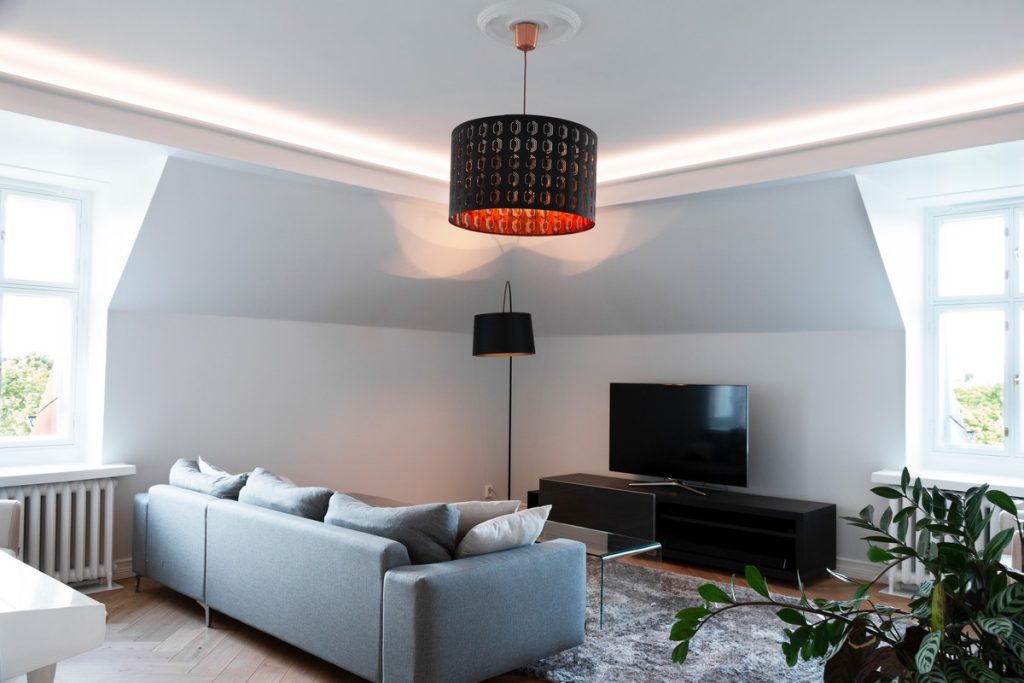
Three structures – choose by situation
| Situation | Structure | Space required | Cost 20 m² |
|---|---|---|---|
| Renovation, ceiling open | Light cove – bulkhead at the wall-ceiling junction | 100-150 mm | €1500-2500 including labour |
| New build, height available | Dropped ceiling – whole ceiling or central part | 150-300 mm | €2500-4000 |
| Finished room | Surface profile at the wall-ceiling junction | 15-30 mm | €600-900 materials, DIY |
Sizing – 20 m² living room
In practice: 5 × 4 m, white matt ceiling, height 2.5 m, sofa 3 m from the TV wall
Perimeter 18 m. For general lighting 14.4 W/m: 18 × 14.4 = 252 W → a 300 W Zigbee driver in the ceiling, or as a retrofit under a corner trim at floor level and behind the TV unit.
Luminous flux 18 × 1 300 lm = 23 400 lm, the ceiling reflects 80 % → 18 700 lm / 20 m² ≈ 150-200 lx depending on ceiling height. Works as general lighting.
Dimmed to 15 % → 30 lx film light.
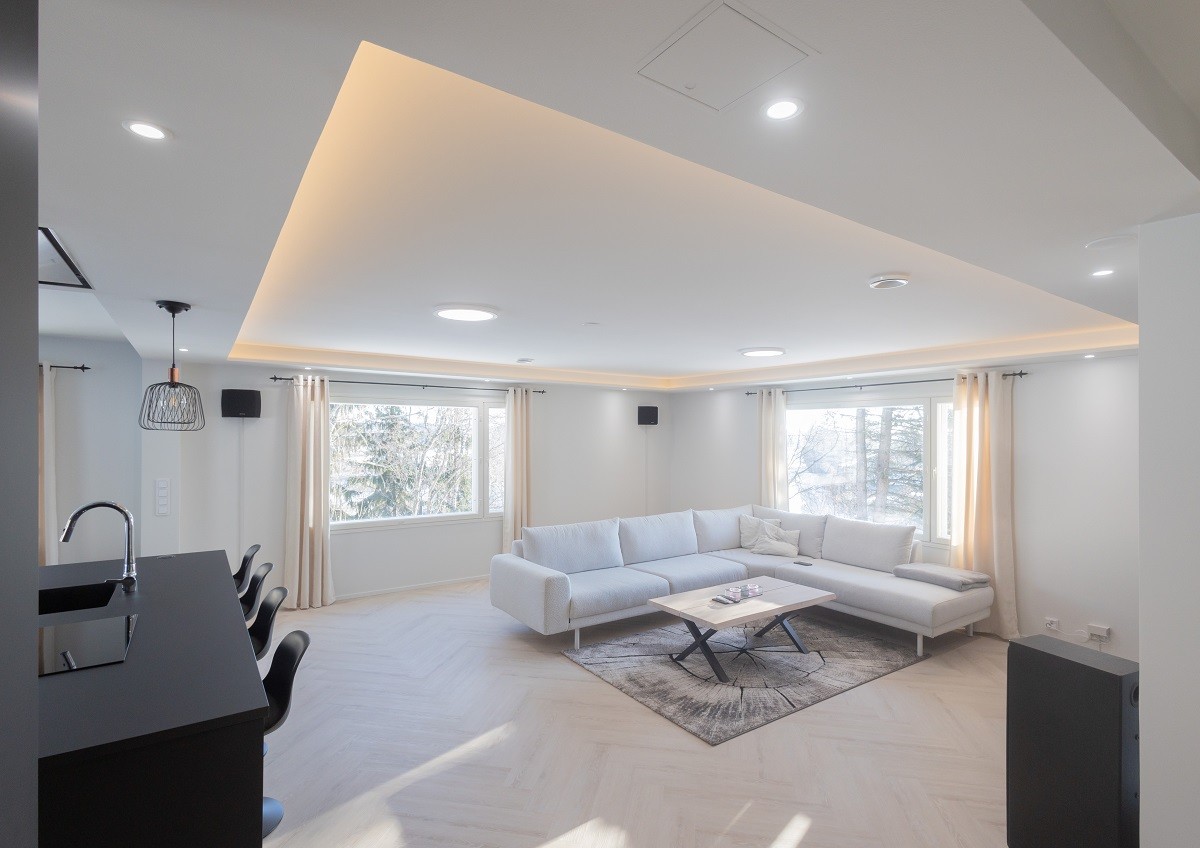
Television and indirect light
The TV wall is the living room’s most important lighting decision. Two rules:
- No bright light behind the TV straight up to the ceiling. A bright ceiling above the screen draws the eye and makes the picture look darker. On the TV wall, the strip dimmer or left out entirely.
- Dim backlight behind the TV onto the wall. A 7.2 W/m strip behind the TV lights the wall around the screen. It reduces the contrast between the screen and the dark room, and the eyes tire less. This is different from general lighting aimed at the ceiling – it is its own group with its own dimming.
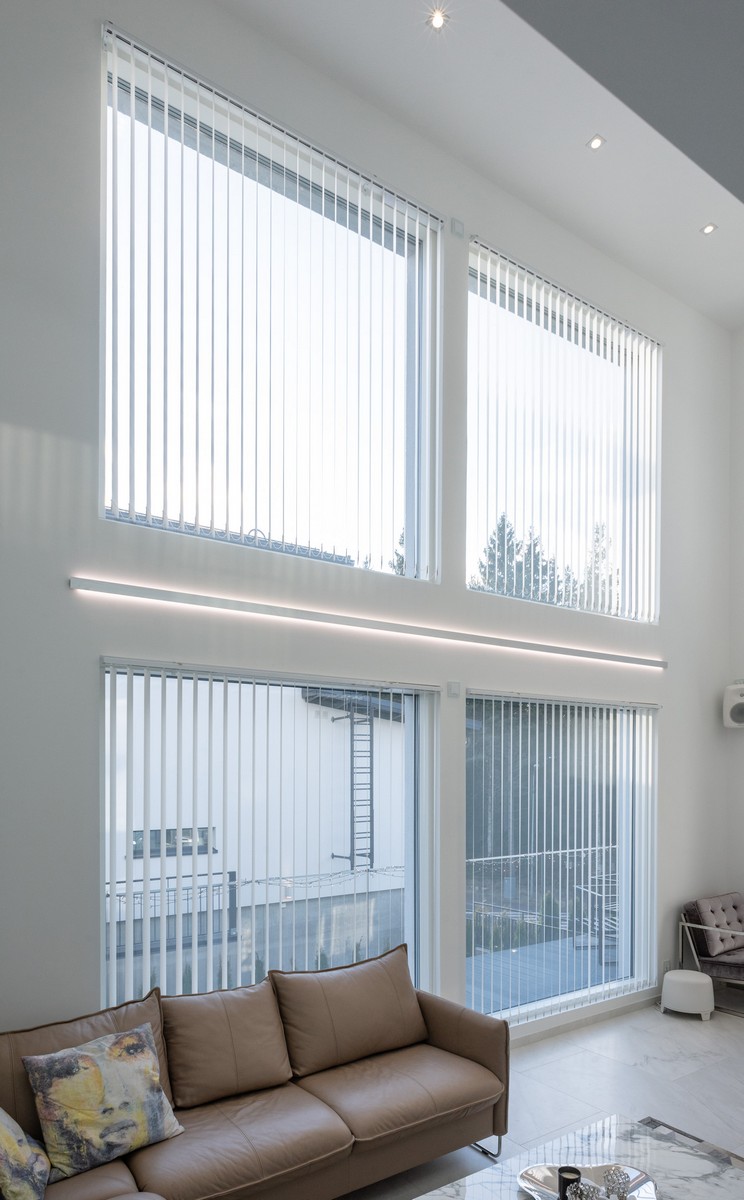
Layering – three groups
| Group | Source | Day | Evening | Film |
|---|---|---|---|---|
| General lighting | Wall-ceiling junction, 3 walls | 100 % | 30 % | 0-10 % |
| TV backlight | Strip behind the TV onto the wall | 0 | 50 % | 30 % |
| Accent lighting | Floor lamp, reading light | As needed | 100 % | 0 |
Three groups means three drivers or a three-channel controller, and one battery button next to the sofa with four scenes. Zigbee does this without cabling. Dimming and control →
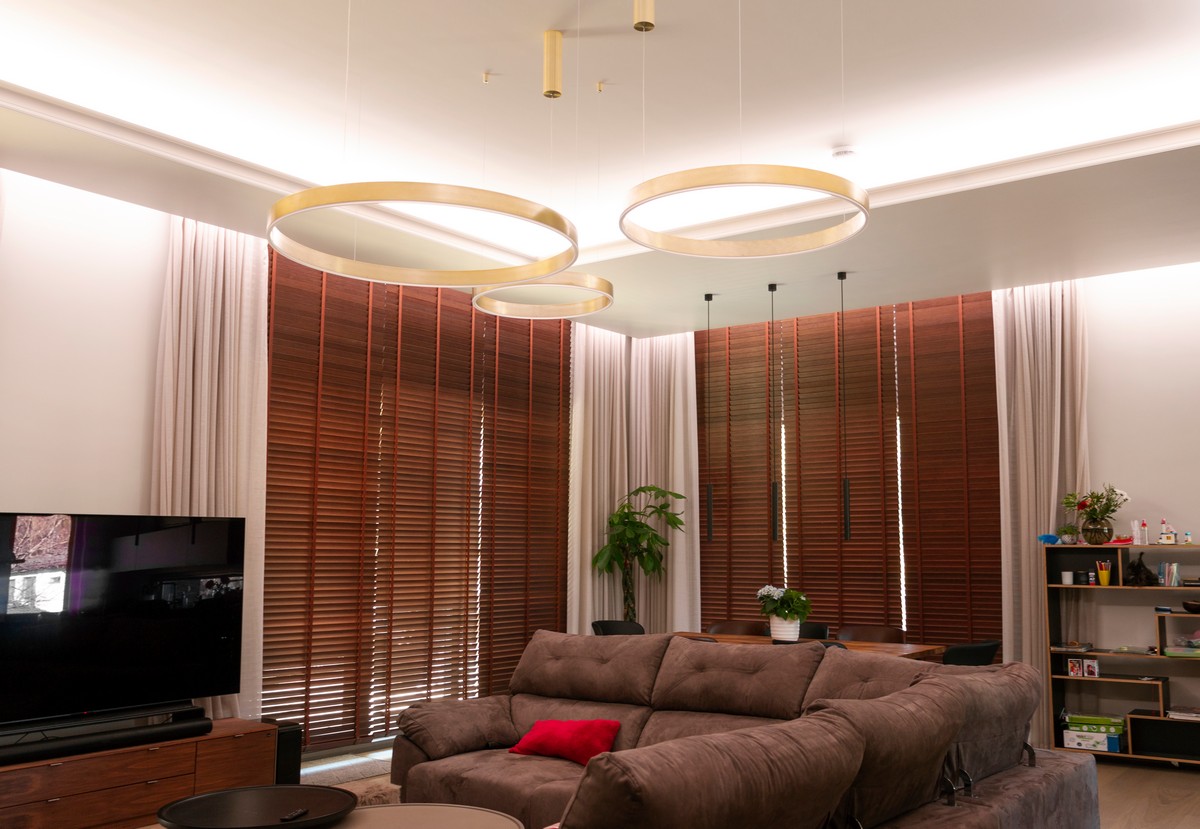
The most common mistake in the living room
The lip is sized standing up. The builder stands, looks up, the strip is hidden. Then you sit on the sofa and the strip shows. Sit where the sofa will be before plasterboarding – a ten-minute test that saves demolition.
Sizing in brief
| General lighting | 150-250 lx – 14.4 W/m for a light ceiling, 17 W/m for wood panelling |
| Colour temperature | 2700-3000 K, or CCT if the room is also used for work |
| CRI | ≥ 95 – skin, wood, textiles |
| Strip type | SMD 120-240 LED/m in a deep bulkhead, COB in a surface profile |
| Dimming | Essential, lowest level under 10 % |
| TV wall | No general light aimed at the ceiling, dim backlight onto the wall as its own group |
Glare shield → · How much light → · Sizing calculator → · Cost →
Living room lighting → LedStore
Frequently asked questions
How is indirect lighting done in a living room?
A light cove at the wall-ceiling junction in a renovation, a surface profile in a finished room, a dropped ceiling in a new build. On the TV wall, no general light aimed at the ceiling, but a dim backlight onto the wall as its own group.
Is indirect light enough as the only light in a living room?
As general lighting, yes – 14.4 W/m and a light ceiling give 200 lx. Reading and crafts need accent lighting as well – indirect light is even but not precise.
How much does indirect lighting cost for a living room?
For a 20 m² room, 14 m of strip and profile about €600-800, driver and control €200-300. A plasterboard light cove adds labour: €1500-2500 in total. A surface profile installed yourself, under €1000.
How much light does a living room need?
150-250 lx for general lighting. On a light ceiling, 14.4 W/m around the whole perimeter gives about 200 lx. In the evening it is dimmed to 30 lux – which is why a dimmer is essential.
Which colour temperature for a living room?
2700-3000 K for a white ceiling. 3500-4000 K for wood panelling, because wood warms the tone. CCT if the room is also used for work.
How is the TV wall lit?
No bright general light to the ceiling above the TV – it makes the screen look dark. A dim 7.2 W/m backlight behind the TV onto the wall, as its own group, reduces contrast and eye strain.
Toteutettuja kohteita
Epäsuora valo olohuoneessa
Alaslasku, verhoprofiili, kattopalkki ja korkea tila – viisi tapaa toteuttaa olohuoneen epäsuora valo.
Kuvat: LedStore.fi toteutetuista kohteista.