
Rooms
Bedroom indirect lighting
Lying down, you look straight at the ceiling. That changes everything: a ceiling-line bulkhead that is perfect in the living room shows the strip from the bed. Here is how to put the light where it does not dazzle.

The bedroom is different
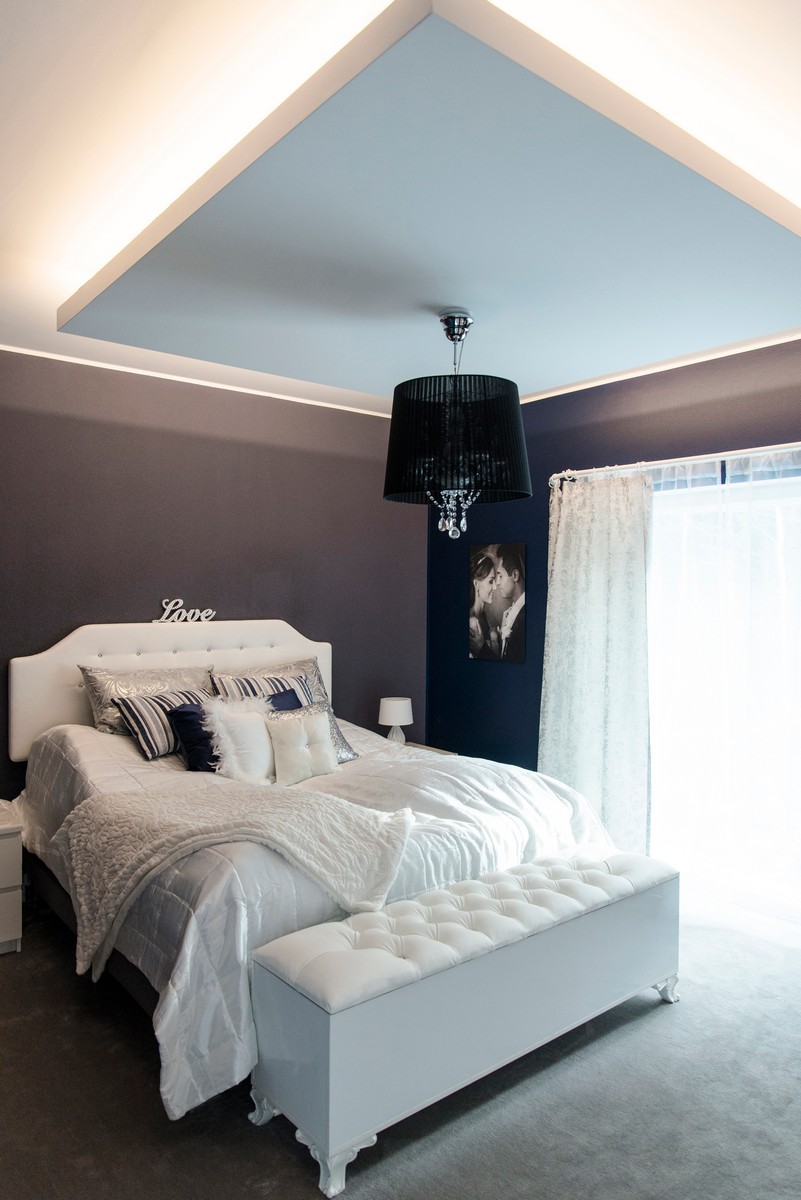
In every other room the viewer sits or stands and looks forward – the ceiling is up at the edge of the field of view. In the bedroom the viewer lies down and looks straight up. A bulkhead on the bed side almost always shows the strip, whatever the lip height. That is why in the bedroom the strip does not go on the bed-side wall, or it goes behind the headboard, where the headboard is the glare shield.
The second difference is quantity. The bedroom is the only room where 50 lux is right and 200 lux is too much. The strip is sized as mood lighting, and a dimmer is essential – without it the light is wrong half the time.
Three solutions
1. Behind the headboard – the most popular
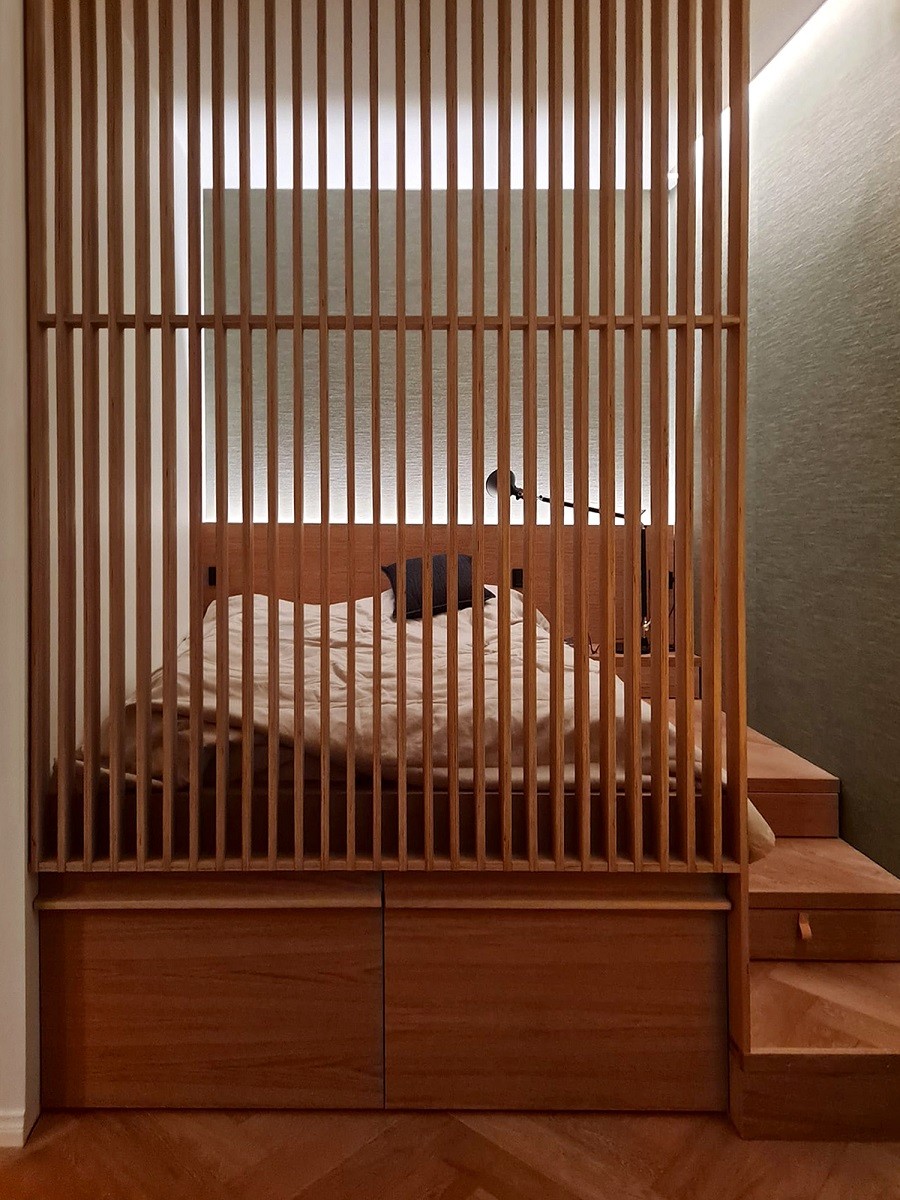
The strip is fixed to the top edge of the headboard or the back panel of the headboard wall, light up onto the wall. The headboard is the glare shield: lying down, you see only the lit wall. It works with a freestanding headboard and with a wall-mounted panel. The headboard only needs to stand 20-30 mm off the wall – that is enough for the strip’s light.
In practice: 160 cm bed, 120 cm high upholstered headboard
Strip behind the top edge of the headboard across the full width 1.6 m + sides 2 × 0.5 m = 2.6 m. COB 7.2 W/m = 20 W, a 30 W Zigbee driver behind the headboard in a socket. A Zigbee battery button on the bedside table: dimming 5-100 %, an optional app schedule switches off at 23:00.
CCT strip 2700-4000 K: cooler for reading, warm for sleeping. Materials €150, control €130. One hour’s work, no electrician.
2. Three walls at the wall-ceiling junction – full general lighting
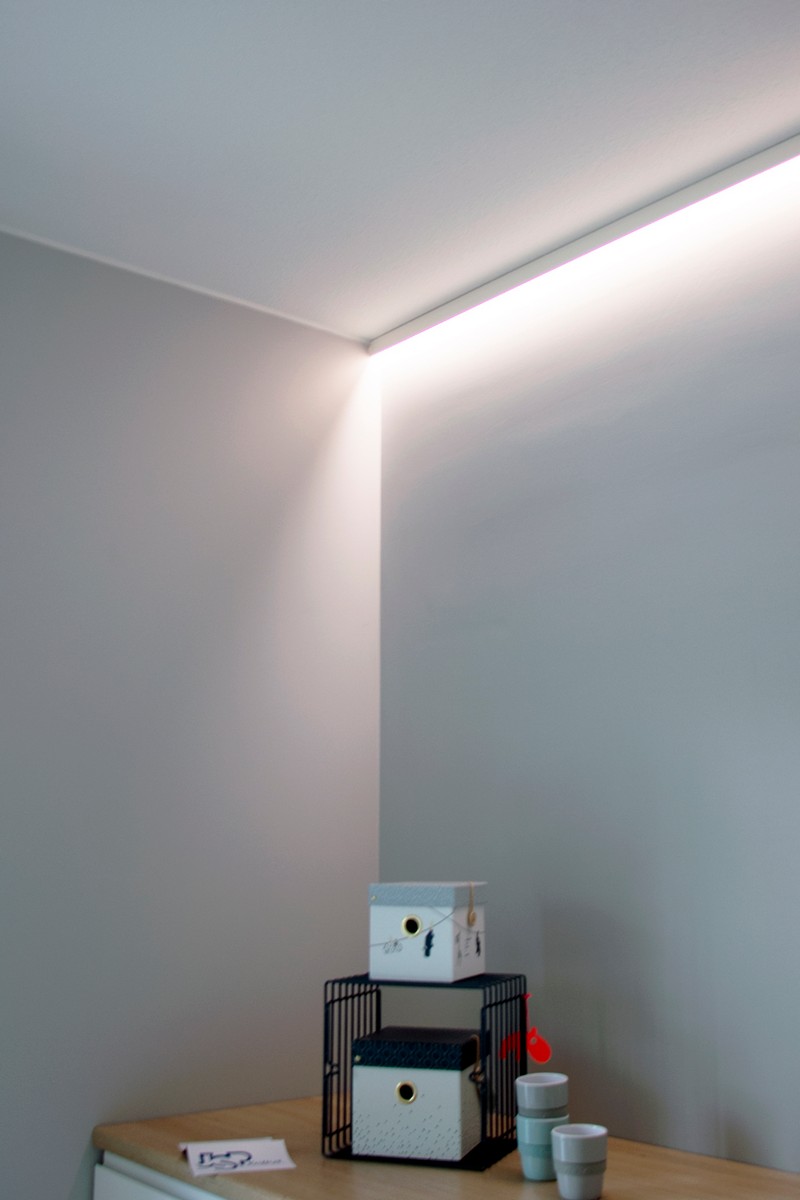
A corner profile at the wall-ceiling junction on three walls – the bed-side wall is left out. It gives even general light for cleaning and dressing, and seen from the bed the light comes from the sides and the foot end, not straight overhead. 14.4 W/m dimmed to 20 % is the evening light.
3. On top of a chest of drawers or wardrobe
The cheapest. Strip on top of the wardrobe or chest of drawers aimed at the ceiling, driver in the same place. The furniture is the glare shield and the profile does not have to be visible. One 7.2 W/m strip on a wardrobe is enough as mood lighting for a small bedroom.
The lying-down test
Before anything is fixed permanently: lie where the bed will be and look at the ceiling. Tape the strip temporarily in the proposed position and switch it on. Can you see the strip or a bright edge? If you can, move it. This test is done lying down, not seated – from a seated position the bedroom bulkhead always looks fine. It is about preventing glare and the height of the lip. Usually the light does not dazzle if it is right behind the lip or at least 50 mm deep.
Why 2700 K or warmer
Cool light, over 3500 K, suppresses melatonin production and delays falling asleep. In the bedroom 2700 K is the maximum, and 2200 K is better as a night light. If the room is also used for reading, a CCT strip gives 4000 K for reading and 2700 K for sleeping – on a schedule it changes by itself.
Sizing
| Amount of light | 50-150 lx – mood lighting, not general lighting |
| Strip power | 7.2 W/m behind the headboard, 14.4 W/m if three walls and you want cleaning light |
| Colour temperature | 2700 K or CCT 2200-4000 K |
| Dimming | Essential. Lowest level under 5 % – cheap drivers stop at 10 %, which is too much as a night light |
| Strip type | COB – the headboard is close, dots would show on the wall |
| Control | Battery button on the bedside table, a schedule to switch off. No ceiling switch you have to get up for |
Glare shield – lying-down test → · Dimming and control → · Colour temperature →
Bedroom lighting → LedStore
Frequently asked questions
How is indirect lighting done in a bedroom?
Behind the headboard, light up onto the wall – the headboard is the glare shield. Or at the wall-ceiling junction on three walls, leaving out the bed side. Lying down you look straight at the ceiling, and a bulkhead on the bed side always shows the strip.
Does indirect light disturb sleep?
Not if the colour temperature is 2700 K or warmer and the light dims below 5 %. Cool light suppresses melatonin. A dimmer is essential in the bedroom.
How much light does a bedroom need?
50-150 lux. The bedroom is the only room where too little is better than too much. A 7.2 W/m strip behind the headboard is enough.
Headboard light or ceiling light?
Headboard light: no glare lying down, atmospheric, installed in an hour. Ceiling light on three walls gives cleaning light but the bed-side wall is left out. Both together are best.
Can bedroom light be dimmed to zero?
With a good Zigbee driver, below 1 %. Cheap ones stop at 10 %, which is too much as a night light. Check the dimming range before buying.
Which colour temperature for a bedroom?
2700 K or warmer. 2200 K as a night light. If you read in the room, a CCT strip gives 4000 K for reading and switches to warm in the evening on a schedule.
Toteutettuja kohteita
Epäsuora valo makuuhuoneessa
Sängynpäädyn valoura, katon reuna ja lipaston korostus – toteutettuja makuuhuonekohteita.
Kuvat: LedStore.fi toteutetuista kohteista.