
Rooms
Hallway indirect lighting
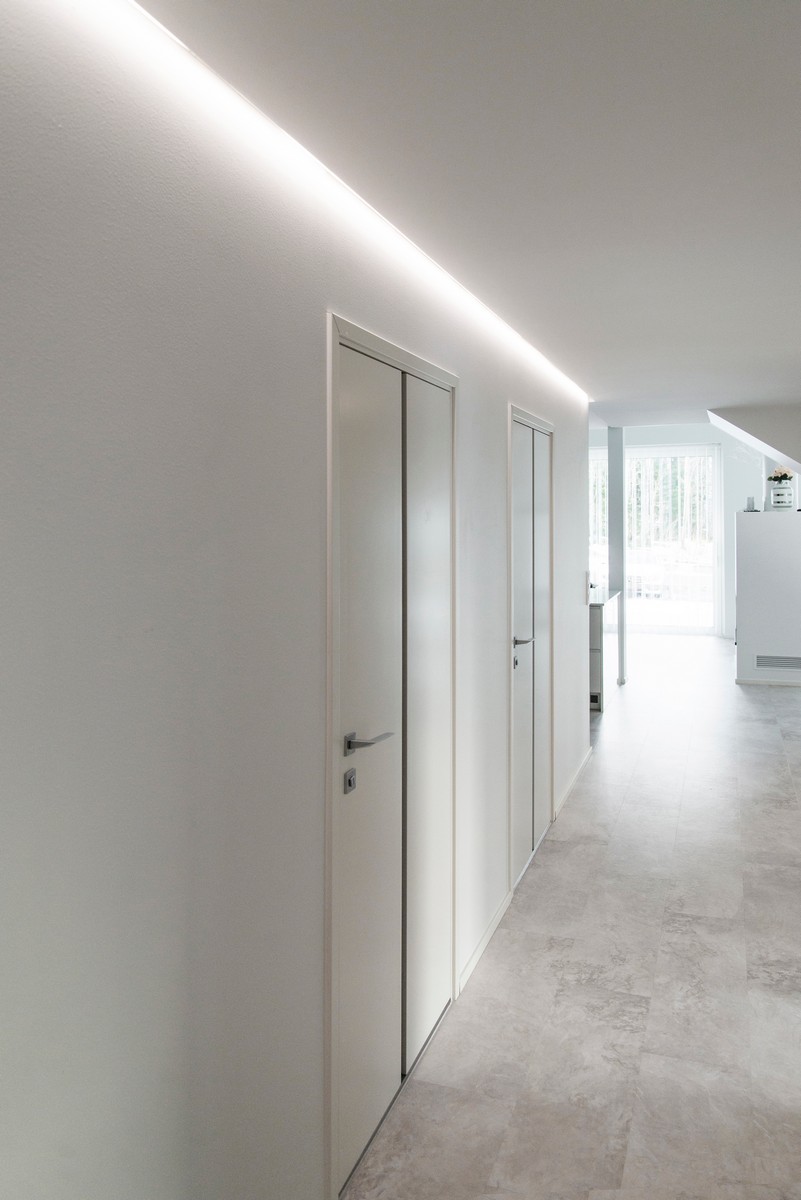
The hallway is the first and last room of the house – and often the darkest. Light rising to the ceiling makes a narrow space taller and wider without moving any walls.

Why a hallway benefits from indirect light more than other rooms
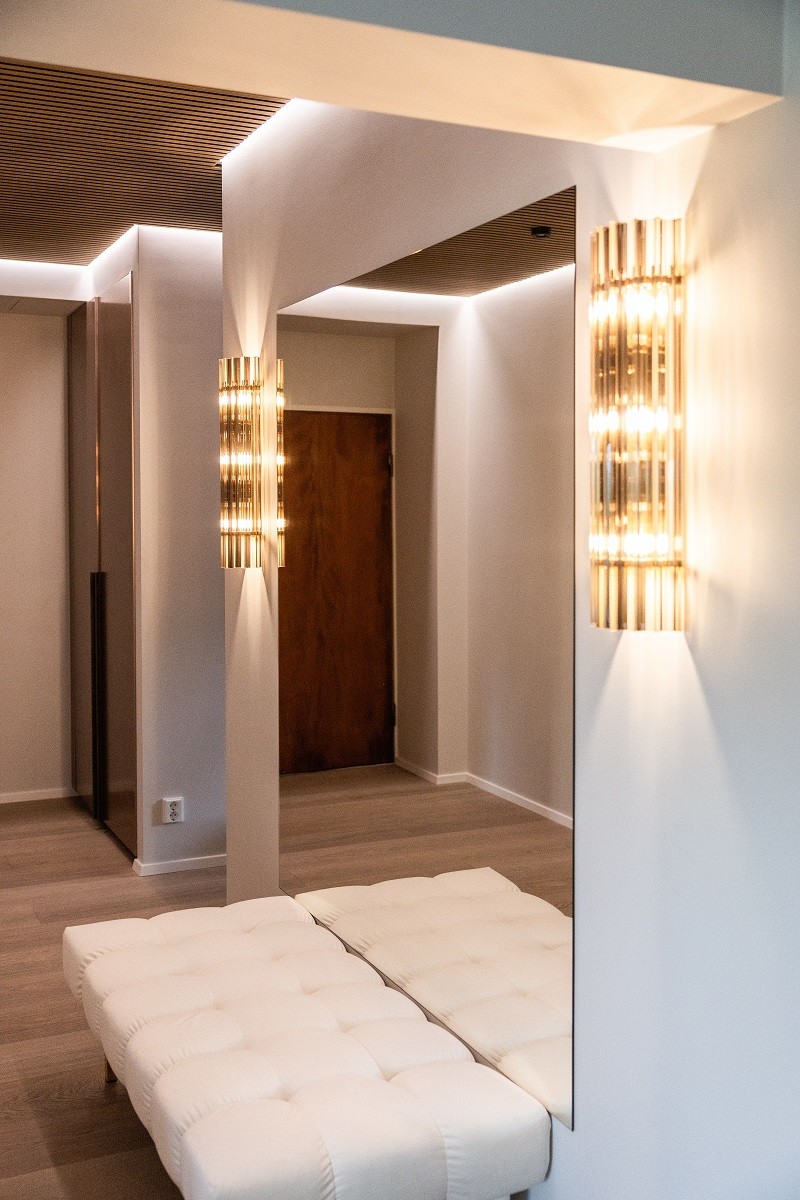
A hallway usually has one ceiling light in the middle. It lights the floor and leaves the ceiling and upper walls in shadow – the space feels low and cramped. When the light comes upward from the wall-ceiling edge, the ceiling is lit, the walls get an even wash and the room feels bigger than it is. This is why hotel lobbies and corridors are lit exactly this way.
The other reason is the nature of a passage: you are in the hallway only briefly, and the light must come on instantly and be enough to tie shoelaces but not dazzle when you come in from the dark.
Four placement options
1. Wall-ceiling edge – all round the hallway
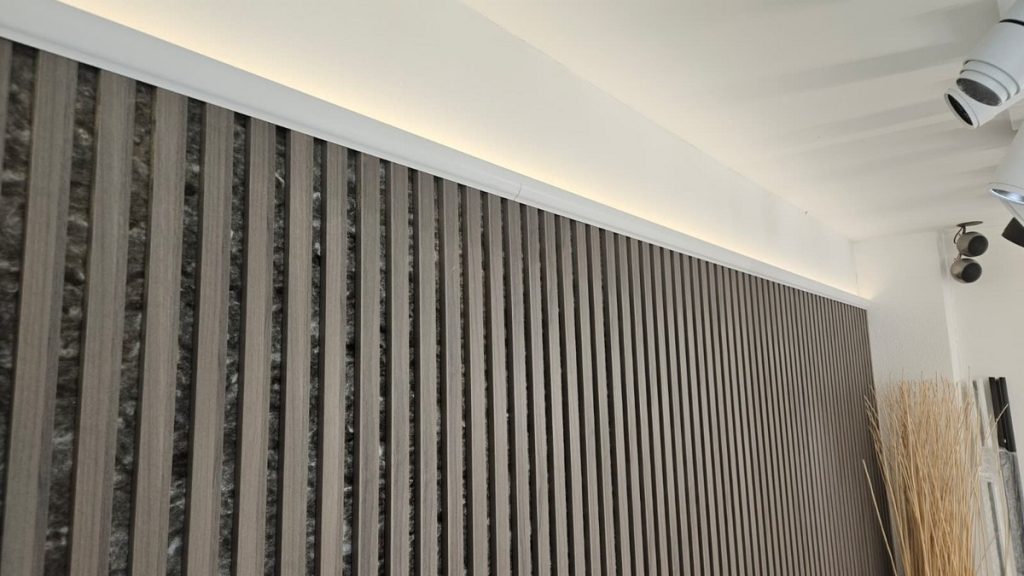
A corner profile or low surface profile at the wall-ceiling junction, light up to the ceiling. This is the most common and it also works in a finished hallway without building work. The profile is screwed to the wall about 40 mm below the ceiling, and the light spreads across the ceiling at a 60-80 degree angle.
In practice: a 1.2 × 3 m terraced-house hallway
The perimeter is about 8 metres, but the door and wardrobe interrupt it – about 5 metres of edge is left to light. Strip 7.2 W/m, 36 W in total, driver 60 W. Materials, strip and profile about €40/m, so €200, driver €60. Installation on a finished wall in half a day.
2. On top of the wardrobe – hidden and simple
If the hallway has a wardrobe that does not reach the ceiling, a strip on top of it aimed at the ceiling. The wardrobe acts as the glare shield and the profile does not need to be neat – it is not visible. The cheapest option and often enough on its own. The driver fits on top of the wardrobe in the same place.
3. Wardrobe kickboard – night light and a floating look
Strip behind the wardrobe kickboard, light onto the floor. The wardrobe looks as if it floats, and the floor light is enough at night without switching on the main light. Combine with a motion sensor and a schedule: off during the day, dim at night.
4. Recessed in the ceiling, light down the wall, also works as a night light
Strip in a recess in the ceiling so the wall is washed with light. Combine with a motion sensor and a schedule: off during the day, in the evening it guides you to the kitchen with shopping bags in hand, and at night it comes on dimmed.
Sizing
| Amount of light | 100-200 lx on the floor – a passage, not a workspace |
| Strip power at the ceiling edge | 7.2 W/m for a light ceiling, 14.4 W/m if the ceiling is dark or the room tall |
| Kickboard | 3.6-7.2 W/m, IP65 if the floor is washed wet |
| Colour temperature | 3000 K – warm but colours stay distinct, clothes look right |
| CRI | at least 90 – 95 in front of the mirror |
| Control | motion sensor + dimmer: 100 % by day, 10-20 % at night |
The mirror needs its own light
Indirect light from the ceiling edge lights the face from above and casts shadows under the eyes. If the hallway has a mirror where you check how you look, it needs its own light on the sides or top edge – a vertical strip on both sides of the mirror is the most effective and even.
Motion sensor – how it is connected
In the hallway light is needed briefly, and a motion sensor saves hunting for the switch with your hands full of shopping bags. Two ways:
- Zigbee sensor – battery powered, no wiring, fixed anywhere. Controls a Zigbee driver wirelessly. Schedule and dimming level are set in the app: 15 % at night, 100 % by day.
- Conventional sensor – connected to the 230 V supply ahead of the driver. Needs wiring and a switch box. No dimming, the light always comes on at full.
Dimming and control → · Questions for the electrical designer →
Products for the hallway → LedStore
Frequently asked questions
How is indirect lighting done in a hallway?
At the ceiling edge with a corner profile, or on top of the wardrobe. Indirect light works especially well in a hallway, because the space is narrow and direct ceiling light makes it cramped. Light rising to the ceiling opens the space.
How much light for a hallway?
100-200 lux on the floor is enough for a passage. More is needed in front of the mirror – it gets its own light on the sides.
Is a motion sensor worth it in a hallway?
Yes. Light is needed only briefly, your hands are often full, and a sensor saves both effort and electricity. A Zigbee sensor needs no wiring and can dim at night.
Which colour temperature for a hallway?
3000 K. Warm but not moody – in the hallway you need to see what you are putting on. If the hallway opens into the living room, use the same tone in both.
Can hallway lighting be added to a finished home?
Yes. A surface profile at the ceiling edge is screwed to the finished wall, the driver goes on top of a cabinet in a socket. No building work and no electrician if the driver has a plug.
Toteutettuja kohteita
Epäsuora valo eteisessä ja käytävällä
Katon reuna, kaapiston sokkeli ja jatkuva valolinja kulkuväylällä.
Kuvat: LedStore.fi toteutetuista kohteista.